
Wildwood City Directory Collections
No continuous standalone Wildwood directory exists on the shelf. The best collections are regional. The St. Louis County Library keeps an 1893 St. Louis County Directory on microfilm alongside selected digitized county volumes. Each volume needs a year-by-year check for geographic coverage. A Wildwood name surfaces only when a county volume covered the settlement or a phone book used a Wildwood delivery place. That distinction matters. The city did not incorporate until 1995, so older material often carries a community or postal label instead of the municipal name.
| Collection | Years located | Where held | Access |
|---|---|---|---|
| St. Louis County Directory | 1893 microfilm row; selected digitized years | St. Louis County Library digital collection and microfilm | Free name or address-portion search, then browse the volume |
| St. Louis city directories | 1821, 1840, 1842, 1845, 1847, 1848, 1850-53, 1857-60, and 1973-80 rows | St. Louis County Library print, microfilm, and microfiche | Regional context, not a continuous Wildwood series |
| Gould's St. Louis directories | 1872-1900 | Missouri Digital Heritage | Digitized searching by name, address, occupation, or date |
| City and county telephone pages | 1968 row located | St. Louis County Library print holdings | Regional address and phone context only |
Those rows prove a collection exists. They do not promise every intervening year. No dedicated Wildwood reverse or criss-cross directory appears in official sources either. Ask library reference staff about a specific title and year before assuming an address-to-name method is available. Gaps deserve the same caution. Surviving rows give no first or last publishing date.
Note: Keep the collection title, year, and access date with every result so another researcher can reopen the same source.
Wildwood Directory Years and Gaps
Historical searching needs more than the word Wildwood. The area was rural and community-based long before incorporation. Older entries can sit under Centaur, Fox Creek, Glencoe, Grover, Hollow, Kelpe, Melrose, Monarch, Orrville, Pond, or Westland Acres. The city identifies eleven historic communities. The Historical Society uses a ten-community description. Record that difference in your research notes rather than forcing one count onto every record.
The St. Louis sources guide also marks a jurisdiction break. Pre-1877 work may need a combined St. Louis search. After the split, city and county records sit apart. A directory title can be geographically useful without being a Wildwood directory. Pair the exact wording on the page with the road, the nearby community, and the year. A hit under an older place name is a lead to verify, not a reason to rewrite the original entry.
Coverage check. The library collection is title-specific. A county or city label does not establish that every Wildwood household was included in that volume.
Reading Wildwood City Directory Entries
Treat a directory entry as a transcription exercise. The regional volumes publish no Wildwood-specific abbreviation key. No legible person-specific Wildwood entry appears in the library's copies, so any field inventory describes details that regional volumes may contain rather than fields guaranteed for Wildwood. Capture exactly what is printed, including punctuation and abbreviations. Then write a separate normalization note for a present-day street name or postal place. That habit keeps the historical source distinct from later interpretation.
| Printed name | Record the name exactly, then note a variant separately if one is needed for a second search. |
|---|---|
| Address or place line | Preserve the road, number, community, and delivery-place wording as printed. |
| Occupation or business | Some directories can include this detail; it should be copied only when present in the volume. |
| Household notation | A spouse, widow notation, forwarding reference, or cross-reference may appear in some editions. |
| Source citation | Save the title, year, page or image number, collection, and whether the entry is a primary listing or cross-reference. |
- Criss-cross directory
- An address-ordered section that can connect a printed address to a listed household. No dedicated Wildwood or St. Louis County run was located, so first confirm a title and year with SLCL.
- Householder index
- An index intended to point to a household listing. The inspected Wildwood-related material did not establish that every volume has one.
- Abbreviation key
- The page that explains a volume's shorthand. The inspected guide did not reveal a Wildwood-specific key, so photograph or transcribe the actual key before expanding marks.
Wildwood City Directories at SLCL
The St. Louis County Library county-directory collection offers the most direct working method. Pick a collection, choose a year, and search a surname or part of an address. Then browse the book itself to confirm the match. That step matters. An index result can be incomplete, a scan can be hard to read, and a county title may skip some historic communities. SLCL also lists yearbooks, newspapers, burial certificates, maps, atlases, plat books, cemetery records, court transcriptions, and local indexes that can test a directory finding.
The Wildwood Archive Center adds a different angle. Its keyword, archive/category, time-period, and date-range controls search city records rather than households. It is not a historical directory. Still, it supplies dated city-process context when an old street or subdivision turns up in a volume.
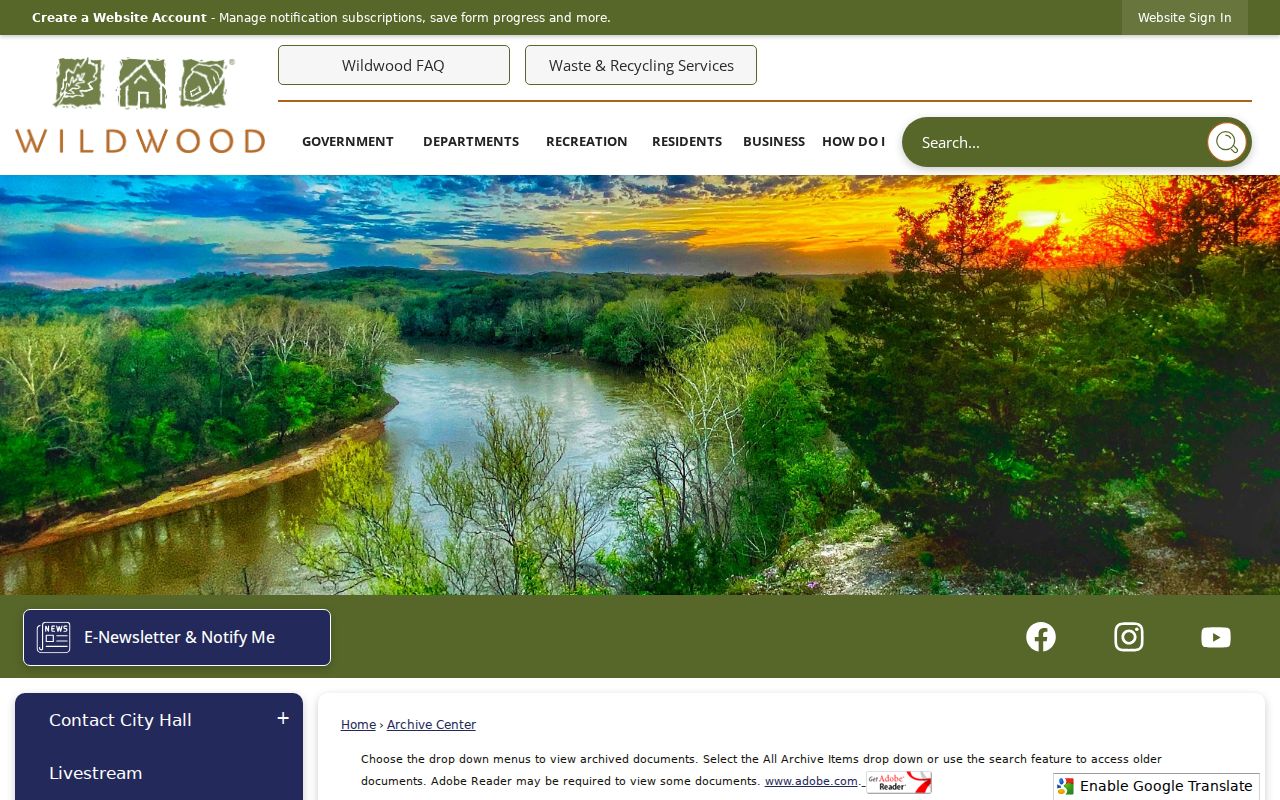
The archive view works best for tying a name or place to a public meeting, planning item, or historic-preservation record. It needs a known date. It cannot prove residency. It proves nothing about where a person lived.
Not everything is digitized. The library's history and genealogy collection offers readers, scanners, computers, and reference consultation. A good reference question names the volume or probable year. Add the spelling as printed and any former community label. That gives staff a defined lookup instead of an open-ended request for names.
Wildwood Directory Place-Name Quirk
A result can look wrong when it is simply old. In 2017, USPS changed the preferred last line for 63038 from Glencoe to Wildwood. It also changed 63040 from Grover to Wildwood. Historical directory, deed, and phone material may still say Glencoe or Grover. The printed place name is evidence. Verify the road and number first. Only then decide the entry belongs elsewhere.
The quirk has a second limit. The statewide ZIP data lists 63069 under Franklin County. Wildwood's own ZIP map, though, shows it serving Wildwood locations. A postal line settles nothing. It does not decide municipal jurisdiction, county records custody, or voting geography. It does not settle the identity of a household either. County parcel and map records are the next check when an address needs geographic confirmation.
Note: A former postal place works well as a search term. It should never replace the address printed in the source.
Wildwood City Directory Context
Missouri Digital Heritage city directories add a statewide digitized layer to any Wildwood search. A directory there can list people, places, addresses, occupations, forwarding addresses, deaths, and businesses, with searching by name, address, occupation, or date. The Gould's St. Louis run from 1872 to 1900 offers useful regional context. Say plainly that its focus is St. Louis, though. It cannot prove a Wildwood resident appears inside.
The library's 1968 city and county telephone-page row behaves the same way. It might point to an address or delivery place, but a second source should confirm any connection. The State Historical Society of Missouri brings town histories, city directories, cemetery compilations, and indexes, plus research services and microfilm or interlibrary loan. Match the source to the time and place first. Then keep its limits in view.
The county-directory collection shows the year-and-title browsing route that belongs ahead of any claim about a household.
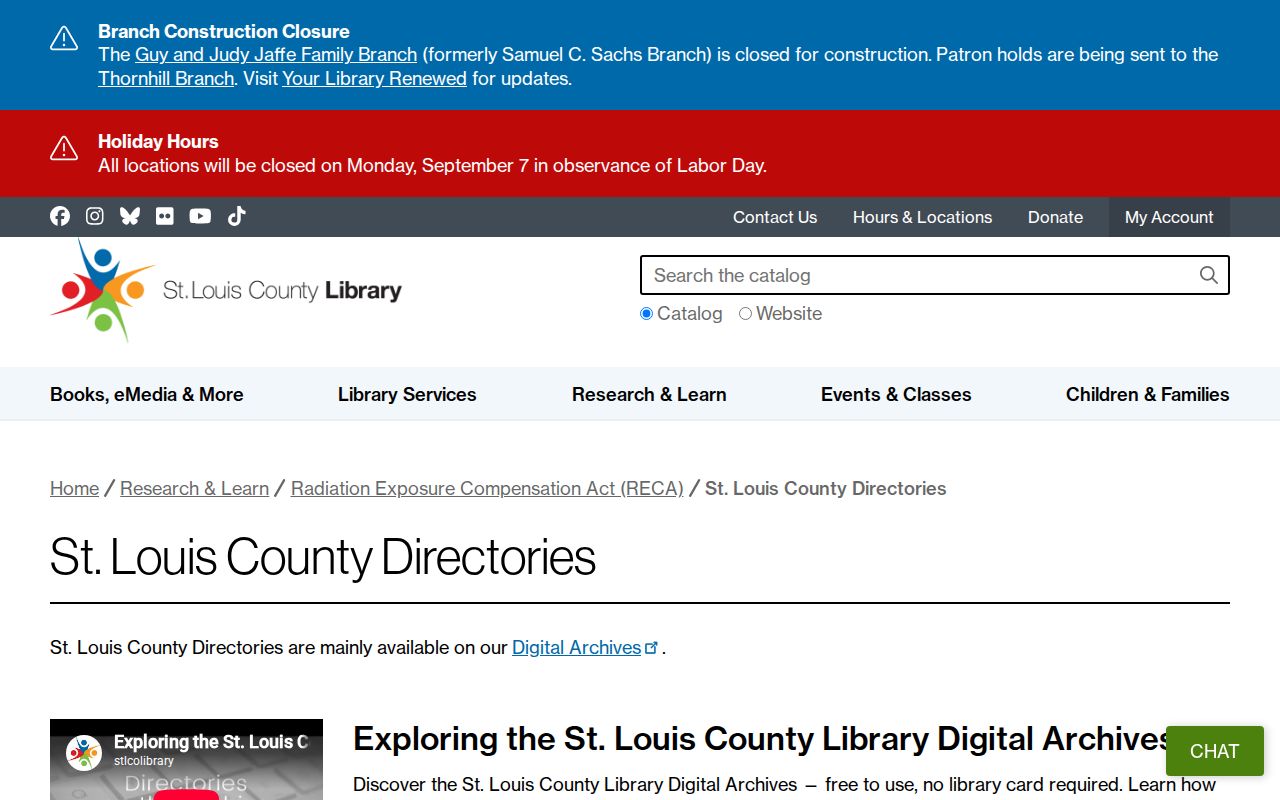
A digitized directory search tells you where to look. The scanned page then supplies the citation, the printed wording, and the nearby context that a bare result list leaves out.
Wildwood History Sources Compared
A thin directory entry calls for a source built for a different job. The 2023 Celebrate the History of Wildwood, Missouri gathers oral histories, an index, and a bibliography. The work took nearly eight years. The Wildwood Historical Society is another local route. It offers oral history, cemetery records, photographs, and context on a changing community. Neither one replaces the original directory page. Each can still explain a place name or point toward a corroborating record.
| Source | Best use | Limit to retain |
|---|---|---|
| Directory or phone volume | Historical name, printed address, and date-specific listing | A snapshot, not current-residence proof |
| History book or oral history | Community, institution, cemetery, or road context | Secondary source; cite page and edition after inspection |
| Deed or probate record | Recorded ownership or estate chronology | Ownership does not prove occupancy |
| Obituary or cemetery source | Date and family-history lead | Verify the original notice or record |
The Historical Society gathers most months on the third Tuesday at 18750 Highway 100. That works as a practical referral for a cemetery or community question. It is not a substitute for a source citation. Its ten-community description is one source's view. The city's eleven-community marker list belongs to another. Each should stay tied to the source that used it.
Trace Wildwood City Directories
Keep every record in its own lane when tracing one household across time. Surnames move, vanish, or print differently from year to year. An absence can mean a move, a death, a missed listing, a different delivery place, or a collection that simply skipped the area. One name line never makes a biography. The strongest conclusion comes from a sequence of dated sources. For modern questions, turn instead to the Wildwood resident lookup workflow. An old listing is not present-day evidence.
- Start with the earliest located county or regional directory hit and copy the exact name, place line, year, and page.
- Search the next available title or year using the printed surname and former community labels such as Glencoe or Grover.
- When an address appears, confirm whether that volume actually has an address-ordered section before attempting a reverse lookup.
- Pair directory years with the available census period, deed, probate, newspaper, cemetery, or obituary material that addresses the same person or place.
- Record conflicts and source dates. If a result vanishes, seek the next independent record instead of guessing why.
The 1876-77 regional split matters most for earlier work. Search St. Louis County after that split, but inspect combined regional collections for anything before it. When an address trail becomes the main question, current parcel and map records fit the site's street resource better than a historical city directory.
Wildwood Directory Timeline
The timeline offers a small framework for choosing the right shelf. It is not a publication history for Wildwood. No continuous directory series for the city exists. Each row marks a verified research marker rather than a guess filling unknown years.
| Date or period | Directory research meaning |
|---|---|
| 1812 | St. Louis County formed, placing early land and county records in a county context. |
| 1876-77 | St. Louis City and County research separates after the regional transition described by SLCL. |
| 1872-1900 | Gould's St. Louis directories provide a digitized city-focused comparison run. |
| 1893 | SLCL identifies a St. Louis County Directory microfilm row. |
| 1995 | Wildwood incorporated, so many earlier records use county, community, or postal labels. |
County directories, city directories, and telephone pages are separate kinds of evidence. The first and last Wildwood-specific publication years stay unknown. That gap belongs in plain sight within any family-history conclusion.